
Translating advice into income: three decisions that matter
We built Elevarm to help smallholder farmers in West Java make better agronomic decisions. But "better decisions" is not a meaningful outcome in itself. What matters is whether those decisions translate into higher net income at the end of a planting season. That is the test we held ourselves to when we reviewed the early results from our pilot cohort across planting season 2025.
We looked at three specific decisions where our platform generates a recommendation: variety selection before planting, fertilizer dosing during the growing season, and harvest timing at the end. Each one has a different mechanism for affecting income, and the evidence from our cohort suggests they compound when all three go right.
Decision one: variety selection
Variety selection is the highest-leverage decision in the input chain. The wrong variety for a soil type can cost 10 to 20 percent of yield potential before the farmer has spent a single rupiah on fertilizer. Yet most smallholders in West Java select variety based on what the seed dealer has in stock that week or what the neighbouring farmer used last season.
In our pilot, farmers who followed the variety recommendation saw higher adjusted yield per hectare in 68 percent of cases relative to their own prior-season result with a self-selected variety. We are measuring this against the same plot, same farmer, one season earlier, which controls for soil and management style. The subset who had the right variety but wrong fertilizer dosing did not sustain that gain, which tells us variety selection alone is not enough. The decisions interact.
A caveat: some farmers could not access the recommended variety in their local kecamatan. Seed availability is a supply chain constraint that a recommendation engine cannot solve on its own. Those cases are tracked separately and fed into our Mitra dealer demand forecasting.
Decision two: fertilizer dosing
The income effect of fertilizer dosing operates differently from variety selection. It shows up primarily in input cost reduction rather than in yield increase. The typical Elevarm recommendation for a mid-fertility andosol plot in Garut Regency comes in roughly 18 to 22 percent below the farmer's habitual application quantity. If the farmer achieves a similar yield with less fertilizer, net income per hectare goes up by roughly the cost of the fertilizer avoided.
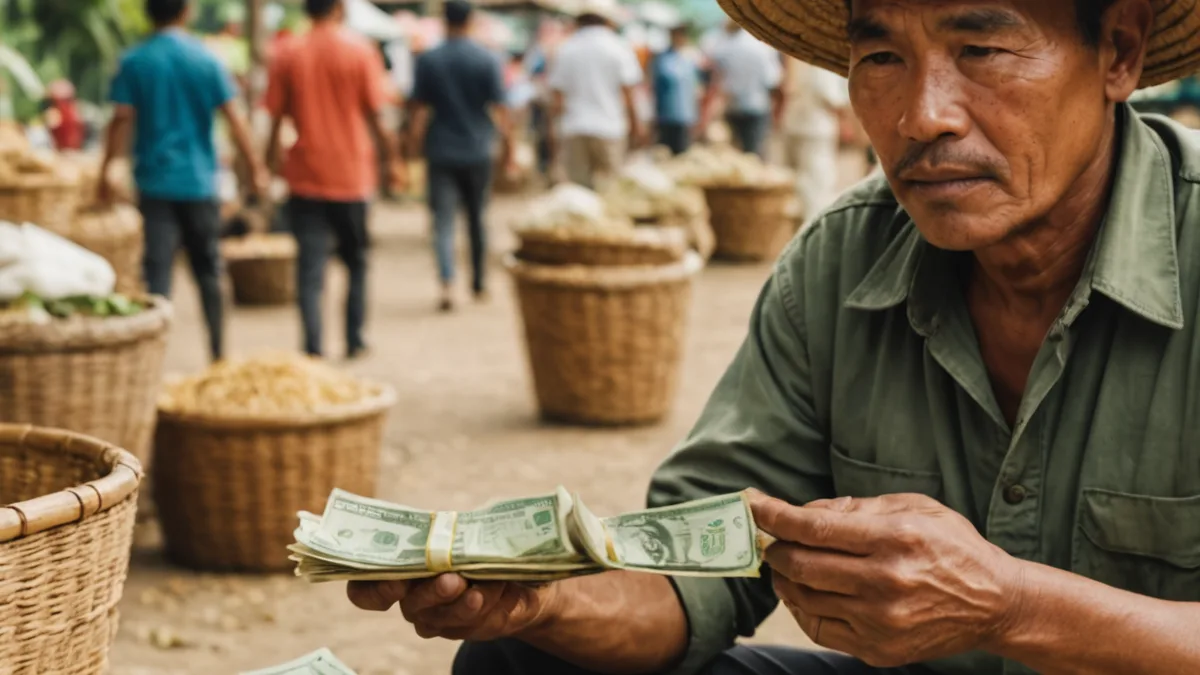
For a farmer spending IDR 1.2 million per hectare on fertilizer inputs per season, a 20 percent reduction is IDR 240,000 per hectare. Across a 0.5-hectare plot, that is IDR 120,000 per season, or about IDR 240,000 per year. This is a real number for a household earning IDR 3 to 5 million per season from rice. It is not transformative by itself, but it is material.
The important qualifier is that over-applying fertilizer does not always reduce yield. It is often agronomically neutral, just wasteful. So farmers who reduce application based on our recommendation will not see a yield drop, but they also will not see a yield increase from this particular change. The income gain is entirely on the cost side. Some farmers find this counterintuitive when they first hear the recommendation, because the mental model of "more fertilizer equals bigger crop" is deeply embedded in the farming culture of the region.
Decision three: harvest timing
We covered harvest timing in more detail in a separate post, but the income impact deserves mention here as well. Among our pilot farmers who harvested within the recommended window, the average farmgate price was approximately IDR 250 to IDR 350 per kilogram above the average farmgate price for farmers in the same kecamatan who harvested outside the window, based on the price data we collected from Mitra dealer transactions for that period.
For a farmer harvesting 4 tonnes per hectare, that range translates to IDR 1 million to IDR 1.4 million per hectare in additional revenue per season. This is the largest single income lever in the three we track, which is part of why we invest in the demand signal component of the harvest timing model. It is also the most volatile, because it depends on market conditions that can shift quickly.
The compounding effect
What the cohort data shows most clearly is that the three decisions compound positively when all three go right. A farmer who selects the right variety, doses correctly, and harvests at the market peak gets a yield improvement plus an input cost reduction plus a price premium. In our best-performing cohort sub-group, those three factors combined moved net income per hectare by an estimated 28 to 35 percent above their own prior-season baseline, based on self-reported yield and selling price data cross-checked against Mitra dealer records.
We are careful not to extrapolate from this sub-group to all enrolled farmers. The best-performing farmers were also, generally, the most engaged users, the ones who followed recommendations consistently, entered feedback data, and asked questions through the platform. Selection effects are present in any early-access program. We will need at least two more seasons of data across a larger and more heterogeneous cohort before we can speak with confidence about the typical outcome rather than the best-case outcome.
What we are measuring next
We are adding post-harvest income tracking to the platform in 2026. This means capturing not just the farmgate price per kilogram, but the total cash received per plot after deducting hired labour for harvest and post-harvest handling. Labour cost is the variable that most dramatically changes net income when a harvest is delayed, because hired harvesting teams are expensive and their availability is constrained during peak season. A harvest timing recommendation that saves IDR 350 per kilogram on price but requires the farmer to hire a more expensive team because the usual team was already committed is not a better decision overall. We want the model to account for that.