
The gap between crop maturity and harvest day
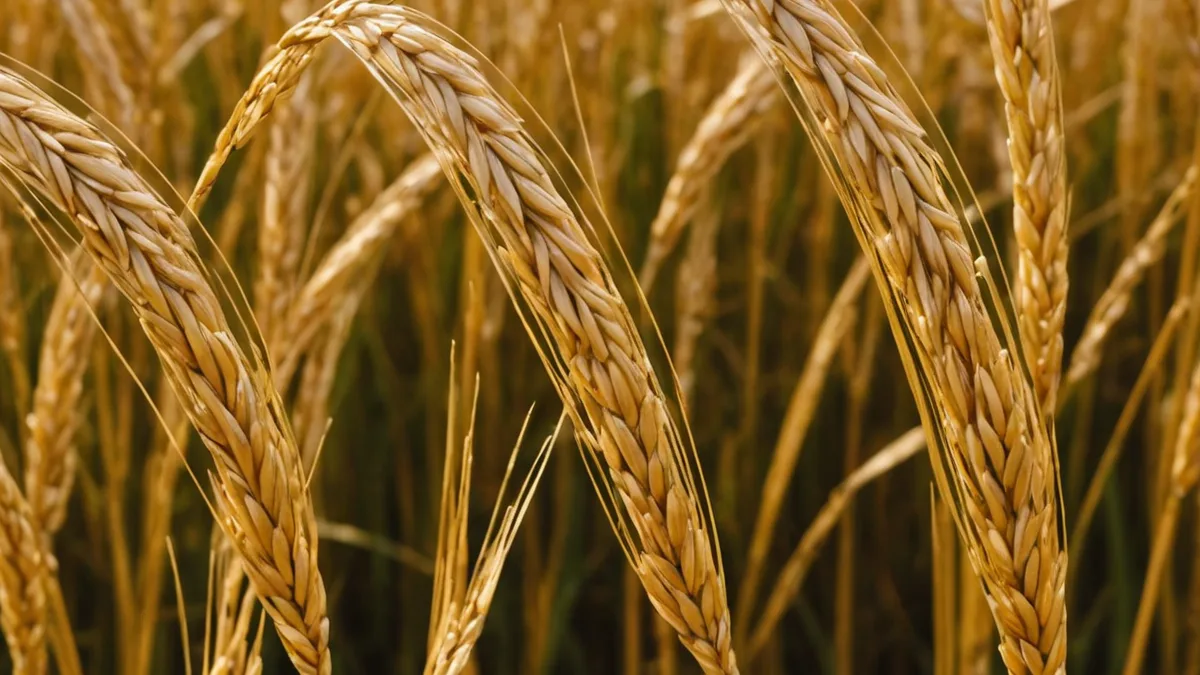
Rice grain reaches physiological maturity roughly 100 to 115 days after transplanting for most medium-duration indica varieties common in West Java. Most farmers know this range. What they cannot predict well is whether the buyers who normally appear at the local assembler on day 105 will be there on the day they show up, and whether the price will be the same as two weeks ago.
This is the core problem. Maturity is a biological window. Market price is a separate curve, shaped by how many other farmers in the surrounding kecamatan harvested this week, how full the local miller's drying capacity is, and what the harga gabah kering panen is doing relative to the floor price. Both curves need to align before "harvest now" is the right instruction.
What happens when farmers harvest on calendar, not on signal
In the Priangan highland regencies of West Java, the MT1 (October to March) planting season often sees clustered harvest dates because farmers in a cooperative planting block transplanted within the same two-week window. When the majority of a 200-hectare block reaches maturity simultaneously, assemblers can offer below-average prices because they know the farmer has no storage option and physically needs to harvest before the grain starts dropping from the panicle. Arrival of multiple sellers in the same five-day window is exactly when prices dip.
Conversely, a farmer who can stagger harvest by even 10 days ahead of the cluster can sell into a period of lower local supply, higher buyer competition, and a meaningfully better farmgate price. The question is how to know when that 10-day window opens.
Two models that need to talk to each other
At Elevarm, we run two parallel prediction models: a grain maturity model and a local demand signal tracker.
The maturity model takes the transplant date, variety type, and cumulative growing-degree data from the regional rainfall and temperature index. It projects the likely 80% maturity window for each enrolled plot. This part is not new. Agricultural research stations in Sukamandi have been publishing maturity tables for IR64, Ciherang, and related varieties for decades. What has changed is that we can now apply those tables at the individual plot level using the farmer's own transplant date rather than working from a village average.
The demand signal tracker is the harder piece. We pull assembler demand data from Mitra dealer partners across the regency to estimate how much paddy is expected to arrive at the market in any given 10-day window. We are not working with a commodity exchange here. West Java paddy markets are fragmented. But even fragmented signals, aggregated from dealer order books, give a directional picture of whether a farmer who harvests in week 14 will find more or fewer buyers than one who harvests in week 16.
A scenario from our early-access cohort
In the second half of 2025, we tested the combined signal with a group of enrolled farmers in two contiguous kecamatan in Subang Regency. The harvest window recommendation was sent 10 days before the projected peak-maturity date. Farmers who shifted their harvest date by 7 to 12 days earlier than their original plan sold into a period when local assembler demand was running above the weekly average, based on our Mitra partner order tracking for that week.
We are careful about overstating this result. This was one planting season with a limited number of enrolled plots. The signal worked well partly because that regency happened to have a clear demand spike in the relevant window. We do not yet have enough season-over-season data to claim the model is consistently predictive. What the pilot confirmed is that the signal is directionally useful and that farmers are willing to act on it when the reasoning is explained clearly.
What this is not
We want to be honest about what harvest timing prediction does not solve. It does not fix the structural oversupply problem that occurs every time a government program incentivizes a whole region to plant the same variety on the same schedule. It does not replace the assembler relationship. And it does not help a farmer who needs harvest income immediately to cover debt taken on at transplanting, regardless of what the market signal says.
Harvest timing is one lever. It is meaningful for farmers who have a few days of flexibility, who have not pre-committed to a buyer at a fixed date, and who are willing to act on a forward signal rather than a calendar habit. That describes a real segment of West Java smallholders. It does not describe all of them, and we are not pretending otherwise.
Where we are taking this next
The next version of the model will incorporate moisture-content estimates from satellite-derived vegetation index data for plots where we have prior-season crop history. Grain moisture at harvest is the primary quality factor for milling recovery, and it is the factor that assemblers penalize most directly when they discount the price. If we can predict moisture readiness alongside maturity, the harvest window recommendation becomes a quality signal, not just a timing signal. That piece is in active development as of late 2025.