
Where the national supply chain ends
Indonesia's agricultural input supply system is, at the national level, reasonably well-organized. Pusri and Petrokimia Gresik produce urea and compound fertilizers at scale. The government subsidy distribution system routes subsidized stock through appointed distributors (produsen) to kios pengecer (licensed retail outlets) at the kecamatan level. The system gets fertilizer into the district. What it does not do well is get the right fertilizer to the right plot, in the right quantity, at the right time.
This is the last-mile problem that defines agricultural input access for most smallholder farmers in West Java. The gap between "available in district" and "applied correctly to my 0.4-hectare plot this week" is filled by a loosely coordinated network of informal dealers, cooperative resellers, and travelling sales representatives. Technology has not meaningfully entered this part of the system yet.
The structure of the gap
The kios pengecer that holds the subsidized quota for a kecamatan typically has a fixed monthly allocation. That allocation is calculated from a Rencana Definitif Kebutuhan Kelompok (RDKK), a farm group needs estimate submitted months earlier. The RDKK is a planning document, not a real-time demand signal. By the time the fertilizer is physically available at the kios, the planting window may have shifted, the crop may have already passed the stage where top-dressing matters, or a disease outbreak may have redirected the farmer's priority spending.
The result is structural: the supply calendar and the agronomic calendar are rarely synchronized at the plot level. Farmers who need urea in week 4 of vegetative growth may find the kios out of stock because three other farmer groups submitted their RDKK earlier and their allocation ran out. Farmers who arrive with cash and a pressing need often end up buying non-subsidized product from informal channels at two to three times the subsidized price, or applying whatever they can get, in the wrong quantities, at the wrong time.
The informal layer and its costs
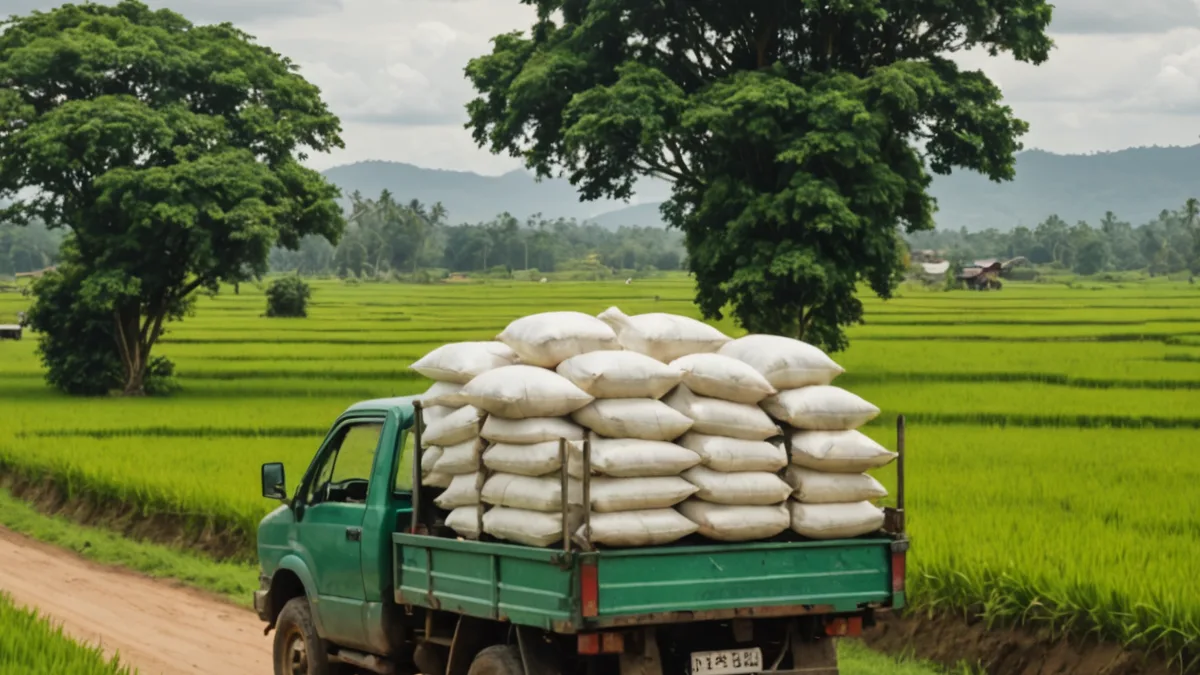
The informal input dealer layer is not malicious. It exists because the formal system cannot clear demand. A travelling rep who drives a pickup loaded with fertilizer sacks to a remote kecamatan provides a real service. The problem is that this service comes at a price premium and with no agronomic guidance. The rep sells what is on the truck, not what the farmer's soil profile actually needs. The farmer buys because there is no time to wait for the subsidized kios to restock, and because the rep is there and willing to provide credit on the spot.
This is the operating reality that Elevarm's Mitra dealer program is trying to work within, not to eliminate. Our Mitra partners are often existing input dealers, people already in this informal layer, who see value in connecting their farmer customers to a platform that helps those farmers order more accurately and plan further ahead. When a dealer knows that three of their connected farmers will need a specific NPK formulation in the next two weeks, they can pre-position stock instead of running out of it.
Where data changes the coordination problem
The coordination failure at the last mile is fundamentally an information problem. The formal system uses RDKK estimates, which are months old. The informal system uses the dealer's own experience of which products move fastest, which is better but still backward-looking. Neither system has a real-time view of which plots in the kecamatan are at which crop growth stage and therefore in what input need window.
This is where the demand forecasting component of our Mitra dashboard has practical relevance. When 40 farmers with enrolled plots in a kecamatan are approaching top-dressing stage simultaneously, a Mitra dealer connected to those farmers can see that demand signal 10 to 14 days in advance. That is enough lead time to request stock, arrange delivery from the distributor, or alert the farmers to pre-order. It does not fix the subsidy quota allocation problem at the national level, but it reduces the mismatch between available product and actual need at the local level.
What technology cannot fix
We want to be direct about the limits here. The last-mile problem has multiple causes. Some of them are addressable through better information: demand forecasting, crop-stage tracking, pre-order coordination. Others are structural: the RDKK allocation system, the subsidy quota mechanism, the financing gap that forces farmers to buy input on credit from whoever offers it. A platform that tells a farmer when to apply fertilizer does not help a farmer who cannot afford the fertilizer at all, or who cannot access the subsidized allocation because their cooperative's RDKK was not submitted on time.
We are building tools for the information layer of the problem because that is what we can actually do. The structural layer requires policy engagement, credit system reform, and distributor network development that is beyond the scope of a small agri-tech team in its first two years. We are honest with ourselves and with our partners about that boundary.
The medium-term opportunity
The case for improving last-mile input distribution through better demand data is strong on the numbers. If a Mitra dealer managing 200 connected farmers reduces stockout events by 30 percent per season, the input application rate for those farmers improves, which flows through to yield outcomes. The dealer benefits from more consistent revenue and fewer frustrated farmers who went to a competitor because the shelf was empty. The farmer benefits from applying the right product at the right time instead of a substitute at the wrong time. The mechanism is mundane. It is just information, arriving earlier than it used to. That is what makes it tractable.